How we work · Commercial spaces
Interior design process for commercial spaces
From business concept to buildable interior, we connect brand identity, user experience, and everyday functionality.
Explore the processInterior Design Process – Commercial Spaces
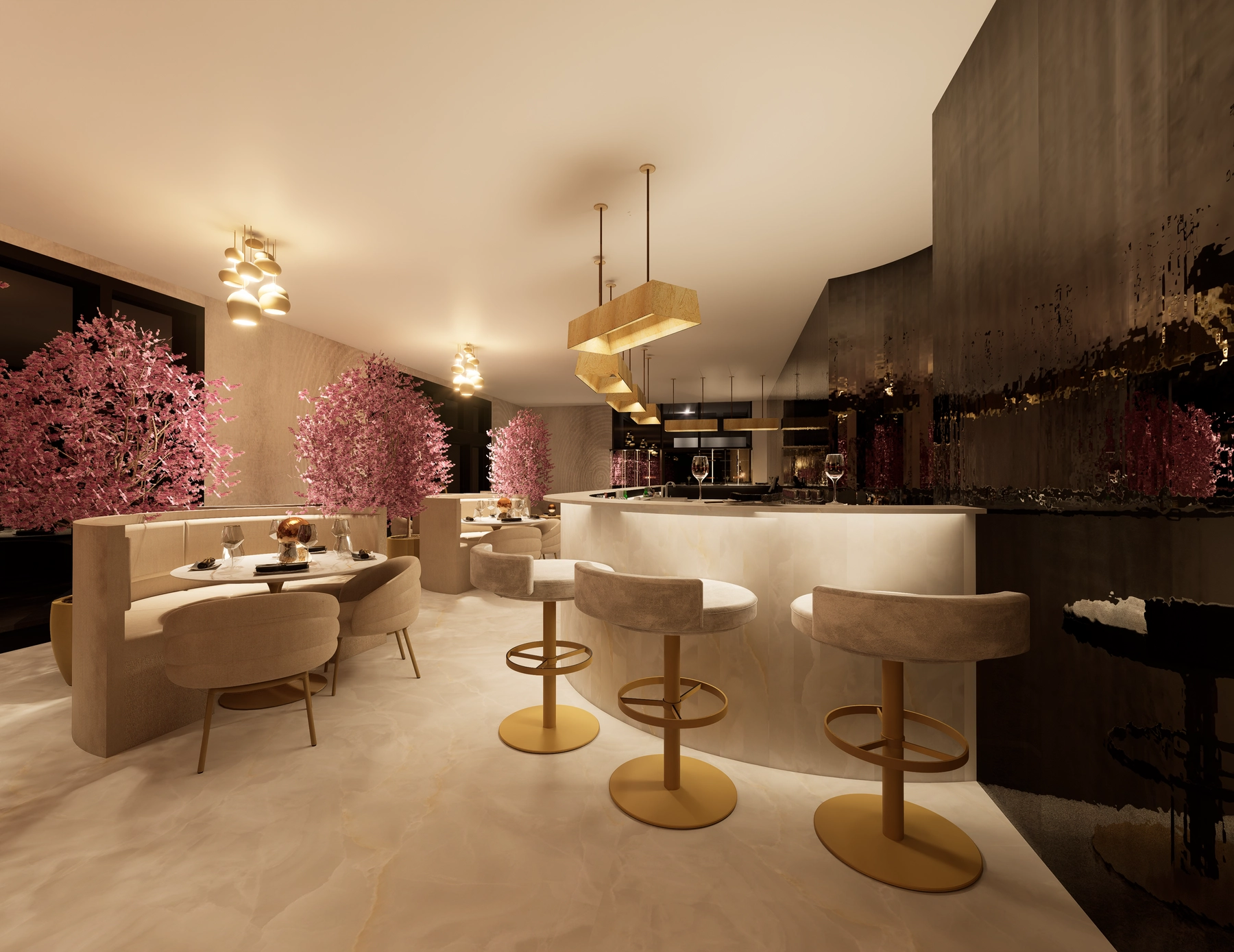
Every project begins with understanding the business concept. In the case of this sushi bar, the initial discussions focused on analyzing how the space would function, employee workflows, expected guest flow, and the atmosphere the investor wanted to achieve.
Alongside the aesthetic direction, the technical, legal, and safety requirements involved in designing public commercial spaces were also brought into focus.
Already in the initial phase, the key goals were defined: to create a space that is visually recognizable and comfortable for guests, while at the same time being highly functional, logical, and efficient for the employees’ daily work.
Special emphasis was placed on the real possibilities of the space, technical feasibility, and the long-term sustainability of the solution.
Concept Design – setting up
The first phase of the project included creating a concept design that set a clear direction for further development. After a detailed analysis of the location, taking measurements, and reviewing all functional needs, floor plan variants were developed with different seating layouts, service zones, and circulation flows.
Click to enlarge
Defining Basic Spatial Guidelines
Special attention was given to zoning the space — clearly separating guest areas from work and service zones, while ensuring optimal connection between the kitchen, bar, and serving area.
Each variant offered a different balance of privacy, spatial dynamics, and capacity, while respecting the applicable legal standards for hospitality facilities.
Selecting the Final Floor Plan Variant
Along with the floor plan solutions, the basic guidelines for materials, lighting, colors, and finishes were defined, together with a moodboard that visually communicated the desired character of the space — a combination of contemporary elegance, quiet luxury, and a hedonistic atmosphere.
This phase gave the investor a clear insight into the potential of the space and supported informed decision-making before moving into design development. After a joint analysis, the solution that best balanced functionality, capacity, and atmosphere was selected, and it became the foundation for the further development of the project.
Click to enlarge
Design Development – coordination of aesthetics and ergonomics
In the design development phase, the selected solution was further developed through all functional and spatial segments of the sushi bar. Special emphasis was placed on the ergonomics of work zones, the flow of employee movement, and the logic of service, so the space could support efficient and uninterrupted work throughout the day.
Click to enlarge
Visual Presentation of the Relationship Between Materials and Lighting
In this phase, intensive coordination with other specialists was also carried out, especially in the area of HVAC systems, ventilation, and air conditioning, which are essential for hospitality spaces.
The systems were integrated into the design in a way that meets legal and technical requirements, while not disrupting the visual identity of the space. Collaboration with mechanical engineers and other relevant professionals enabled a complete and technically correct solution.
Space Development
Design Development included the development of materials and finishes for all areas of the space, precise lighting planning with an emphasis on atmosphere and functionality, as well as the preparation of 2D drawings, sections, and details.
Realistic 3D renders were used as a tool to verify spatial relationships, ambiance, and details, as well as to communicate clearly with contractors and investors.
Click to enlarge
Technical Design / Construction Documents – The Foundation for Quality Execution
The final phase of the project included preparing technical design and construction documentation, which is essential for the safe, precise, and high-quality realization of a commercial space. Detailed technical drawings of all interior elements were prepared, along with plans for installations, lighting, HVAC systems, and specifications for materials and equipment, with special emphasis on the development of custom-made joinery elements.
The main bar with the tap area in the central part of the space, as well as the terrace bar, were designed in detail down to the last element, with the goal of achieving maximum functionality for employees while also creating a strong, visually dominant feature that defines the space and naturally draws guests’ attention.
Click to enlarge
Documentation
Special importance was given to aligning the project with current laws and regulations governing public and hospitality spaces, ensuring the safety, functionality, and long-term sustainability of the facility.
Clear and precise documentation enabled contractors to understand the project accurately, reduced the need for on-site improvisation, and ensured quality control during execution.
Click to enlarge
Final Product
During realization, coordination and supervision of the contractors were carried out to ensure consistency between the designed and executed solution.
This approach makes it possible for a commercial space, such as this sushi bar, to be not only visually attractive, but also technically correct, functional for employees, and comfortable for guests — a space that successfully supports both the business and the guest experience.
Gallery – Renders
Click to enlarge
Frequently Asked Questions
Answers to the most common questions before starting a collaboration.
How long does a typical project take?
It depends on the size and complexity of the project.
- Concept Design: 2-3 weeks
- Design Development: 4-8 weeks
- Technical Design / Construction Documents: 10-12 weeks
Supervision during construction usually lasts as long as the work itself - from several weeks to several months.
What are your prices?
The price is formed according to the type and complexity of the project, square footage, deadlines, and the level of detail you need.
We also offer a personalized approach by preparing individual offers after consultations, because we treat every project as unique.
Contact us so we can review your situation and options together.
How can I use your renders after the project is finished?
Renders are part of the design documents and you can use them for:
- More detailed coordination with contractors
- Visual presentations for potential buyers (if you are an investor)
- Marketing purposes (in the case of commercial spaces)
- A better visual overview before the work begins
Can I combine services (e.g. concept + design development)?
Absolutely. Most clients start with Concept Design and then continue with Design Development or Technical Design / Construction Documents once they are sure which direction they want to take.
This allows you to make decisions step by step, without the obligation to do “everything at once”.
Do I need to be present during consultations?
Initial measurement and analysis: It is preferable that you are present so we can clarify the specific needs and possibilities of the space.
If on-site measurement is not possible, it is necessary to provide accurate floor plans with marked dimensions, photographs of the space, and as much written information as possible about your wishes and vision for the space.
Later phases: Working with photographs, measurements, and written communication if that suits you better.
Consultations can be held online, by phone, or in writing.
SERVICES
CONCEPT DESIGN
- Analysis and preparation of a technical floor plan of the existing condition (site visit and measurement)
- Creation of 2–3 floor plan solution variants with furniture and equipment layouts
- Basic spatial and design solution for the layout of wall and floor finishes
- Proposal of basic colors, materials, finishes, furniture, equipment, lighting, and sanitary elements
- Creation of a moodboard as a visual representation of the space atmosphere
DESIGN DEVELOPMENT
- Additional development of the selected concept by room
- Creation of moodboards for all rooms
- Creation of 2D views and sections of the space
- Creation of a 3D presentation of the concept design
- Creation of realistic 3D visualizations (renders)
TECHNICAL DESIGN / CONSTRUCTION DOCUMENTS
- Creation of technical drawings for the execution of planned works
- Demolition plan and dismantling of existing elements and construction of new walls
- Wall and floor finish installation layout
- Plan of lighting, socket, and switch positions, including on/off scenes
- Designer supervision (by agreement)
GET IN TOUCH
Let’s talk about your project
info@dokadesign.com
Phone Number
+385 91 641 0040
Location
Zagreb, Croatia